Understanding how schools can benefit from installing padel courts is now one of the most relevant questions in Southern African sports infrastructure planning, and the numbers back it up. Schools can install up to 3 padel courts in the footprint of a single traditional tennis court, meaning a facility with two underused tennis courts suddenly has the capacity to run six padel courts simultaneously, tripling student participation without acquiring a single additional square metre of land.
Key Takeaways
| Question | Answer |
|---|---|
| Can a school convert its existing tennis courts to padel? | Yes. A tennis court padel conversion is one of the most cost-effective routes for schools, repurposing existing infrastructure with minimal disruption. |
| How many padel courts fit in a school’s space? | Up to 3 padel courts fit in the same footprint as one standard tennis court, making padel ideal for schools with limited outdoor space. |
| What does a turnkey padel court project involve? | Turnkey padel courts cover the full project lifecycle: feasibility, design, civil works, court installation, lighting and handover. |
| Do schools need indoor padel courts? | Indoor padel courts with roof structures ensure all-weather play throughout the academic year, protecting the capital investment from weather disruption. |
| Who handles padel court construction for schools in South Africa? | Padel Build is South Africa’s premier turnkey padel court construction company, managing every stage from concept through to handover and ongoing maintenance. |
| Is padel court maintenance included after installation? | Yes. Padel court maintenance programs cover turf, glass, structure and lighting to extend the court’s lifespan and performance. |
| Can schools generate revenue from padel courts? | Absolutely. Courts can be opened to community bookings, clubs and weekend tournaments, creating a sustainable income stream to offset build costs. |
Why Schools Are Choosing Padel Courts in South Africa in 2026
Padel has exploded across the country so rapidly that there are now over 1,400 padel courts in South Africa, creating one of the most dynamic sports infrastructure stories we have seen in decades. Schools across Johannesburg, Cape Town, Durban and Pretoria are now part of that story.
The sport’s growth is not accidental. Padel is faster to learn than tennis, generates significantly more social interaction, and is accessible to students across a wide range of fitness levels and ages. For schools looking to grow sports participation numbers and improve PE programme quality, padel courts South Africa represent one of the smartest additions a facility can make in 2026.


How Schools Can Benefit From Installing Padel Courts: The Physical Education Advantage
The PE case for padel is compelling. Padel rallies are 30 to 50% longer than in tennis, providing significantly more active gameplay and exercise time per session. That means students spend more time moving, less time retrieving balls, and more time developing coordination, agility and cardiovascular fitness within a standard lesson period.
For PE departments operating under time constraints, this matters. A 45-minute lesson on a padel court delivers measurably more active minutes than the equivalent session on a tennis court or athletics track.
Beyond raw exercise time, padel develops:
- Hand-eye coordination and spatial awareness through wall-play mechanics unique to padel
- Team communication and strategy since padel is always played in doubles
- Sustained aerobic fitness through those longer, more dynamic rallies
- Social confidence because the game is highly social and far less intimidating for beginners than tennis
Research consistently links school sports participation to improved academic results, with participation in school-sponsored activities associated with measurable gains in core subject performance. Padel courts deliver that daily physical engagement in a format students actually enjoy coming back to.
How Schools Can Benefit From Installing Padel Courts on Limited Grounds
Space is the most common objection schools raise when they first explore padel court installation. It is also the easiest to resolve.
A standard padel court measures 10m x 20m. That compact footprint means three padel courts fit within the same ground area as a single full-size tennis court. For schools with two or three older tennis courts, the potential to create a multi-court padel facility on existing grounds, without any land acquisition, is a significant planning win.
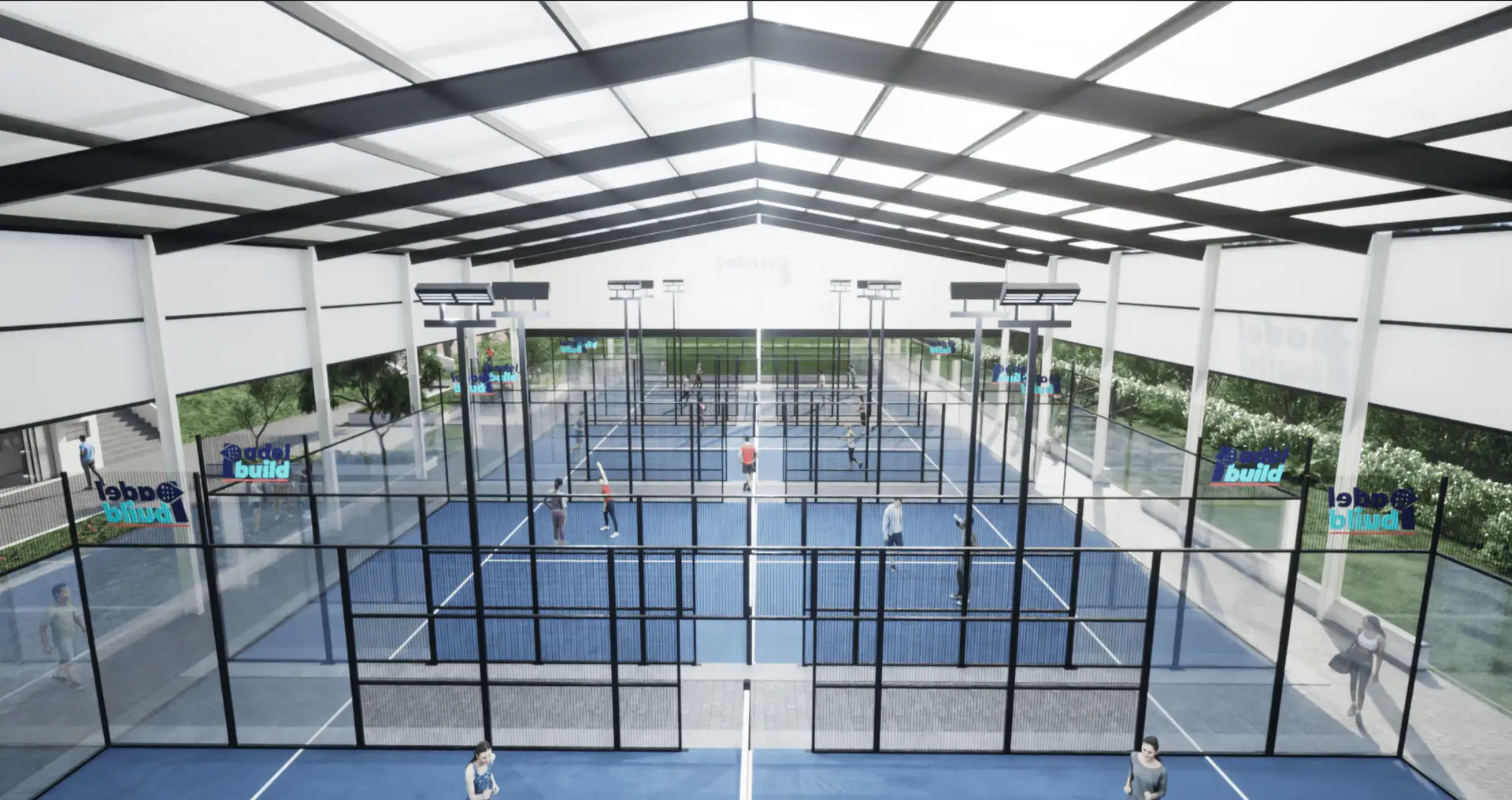
We combine architectural planning with court technology so each site feels coherent, whether it is four courts at a local club or a multi-court destination venue. The same principle applies directly to school campuses: padel court design is driven by the specific site constraints, student flow, and programme requirements of each school.
Our padel court feasibility process starts with a site visit and layout analysis before any capital commitment is made. We assess how many courts fit the available footprint, what civil prep is needed, and what the realistic utilisation model looks like for a school environment.
Tennis Court Padel Conversion: The Best Option for Schools With Existing Infrastructure
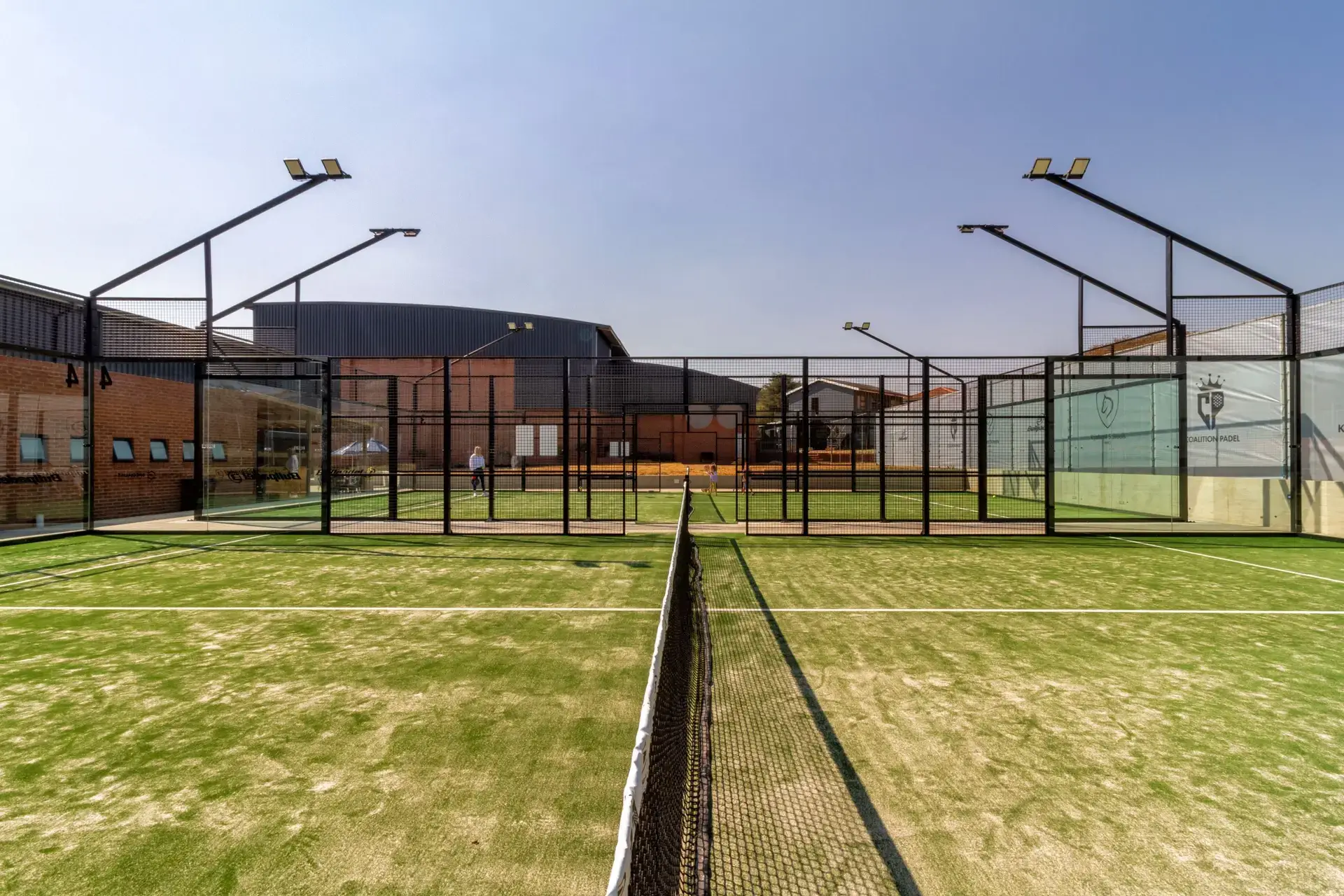
Many schools across Southern Africa padel courts projects have begun not with a greenfield build but with a conversion. If your school has older or underused tennis courts, a tennis court padel conversion is the most efficient route to a premium padel facility at a lower overall cost.
Our conversion process is designed for minimal downtime and maximum visual appeal. The existing concrete slab is retained (provided it is in sound condition), and the tennis court infrastructure is replaced with a fully compliant padel structure including glass walls, steel framing, turf, nets and lighting.
Key advantages of a conversion for schools include:
- Lower civil cost because foundation works are already in place
- Faster project completion with less disruption to the academic programme
- Increased court count by sub-dividing the tennis court footprint into multiple padel courts
- Immediate upgrade in facility quality with world-class glass-walled courts replacing dated tennis infrastructure
We have delivered successful sports recreational conversions across the country. View our completed projects to see what a conversion looks like at different scales and site types.
Indoor and Outdoor Padel Courts: Choosing the Right Solution for Your School
Schools face a specific challenge that clubs and commercial venues do not: the academic calendar creates predictable high-demand periods and extended holiday gaps. Getting the indoor versus outdoor decision right is therefore central to maximising court utilisation and protecting the school’s investment.
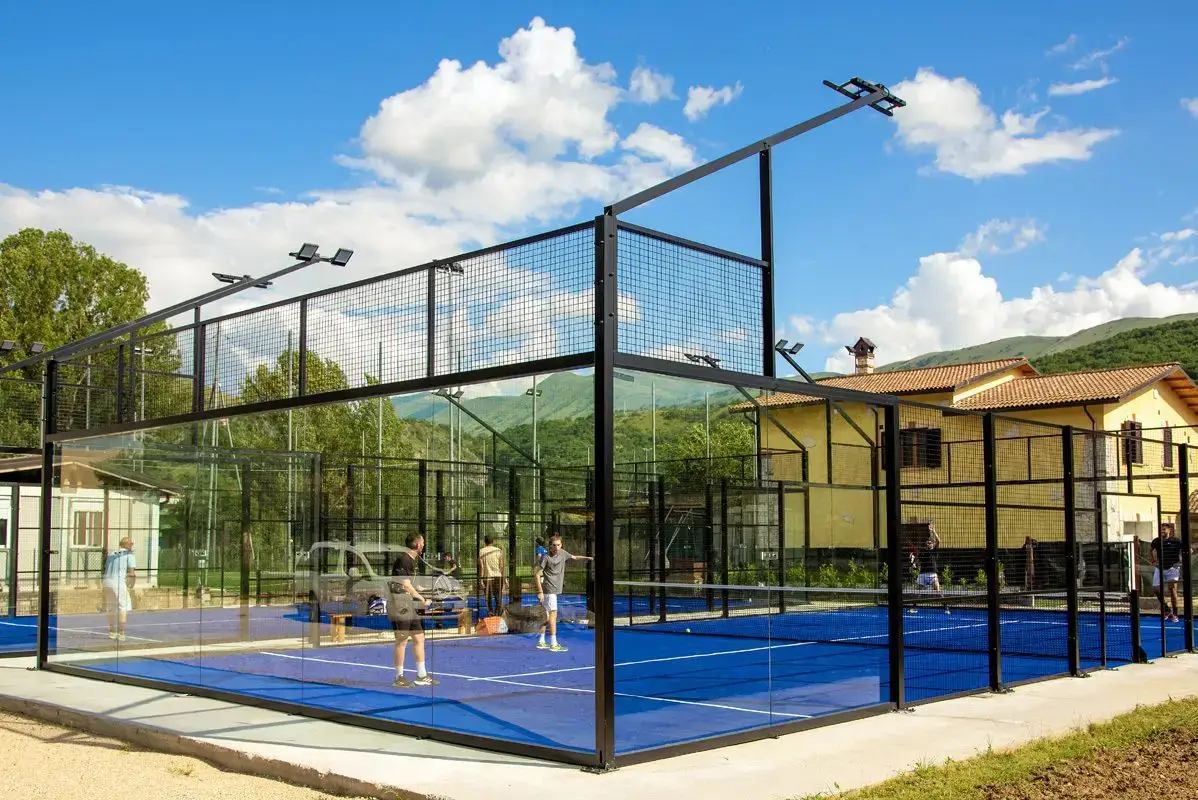
Outdoor padel courts are the most cost-effective entry point. They deliver full padel functionality at a lower capital outlay and work well in regions with favourable weather conditions. Outdoor padel courts are well-suited to schools in Johannesburg, Pretoria, Cape Town and Durban where the climate supports year-round outdoor play for most of the school year.
Indoor padel courts with padel court roofing solutions provide all-weather play capability and covered indoor padel facilities achieve year-round utilisation rates of 70 to 85%, regardless of weather conditions. For schools that want to open courts to the community during school holidays or generate revenue from evening and weekend bookings, a roof structure is a strong long-term investment.
We offer three custom roof options:
- Portal Frame: A clean, structural solution for multi-court covered facilities
- Faceted Frame: Architecturally distinct, suited to schools where aesthetics and campus design matter
- Dome Frame: Full enclosure for maximum weather protection and a statement facility
Explore our full range of padel court roofing solutions to compare what suits your campus layout and budget.
How Schools Can Benefit From Installing Padel Courts Through Premium Court Options
Not all courts are equal, and for schools that want to build a genuine sports programme around padel, the court quality directly affects player experience, safety and long-term durability.
As specialists in padel court construction, we are working inside this boom every day and see firsthand how courts, clubs, and services are evolving into a mature ecosystem by 2026. Schools that invest in premium padel courts from the outset avoid the costly rework that comes with lower-spec installations.
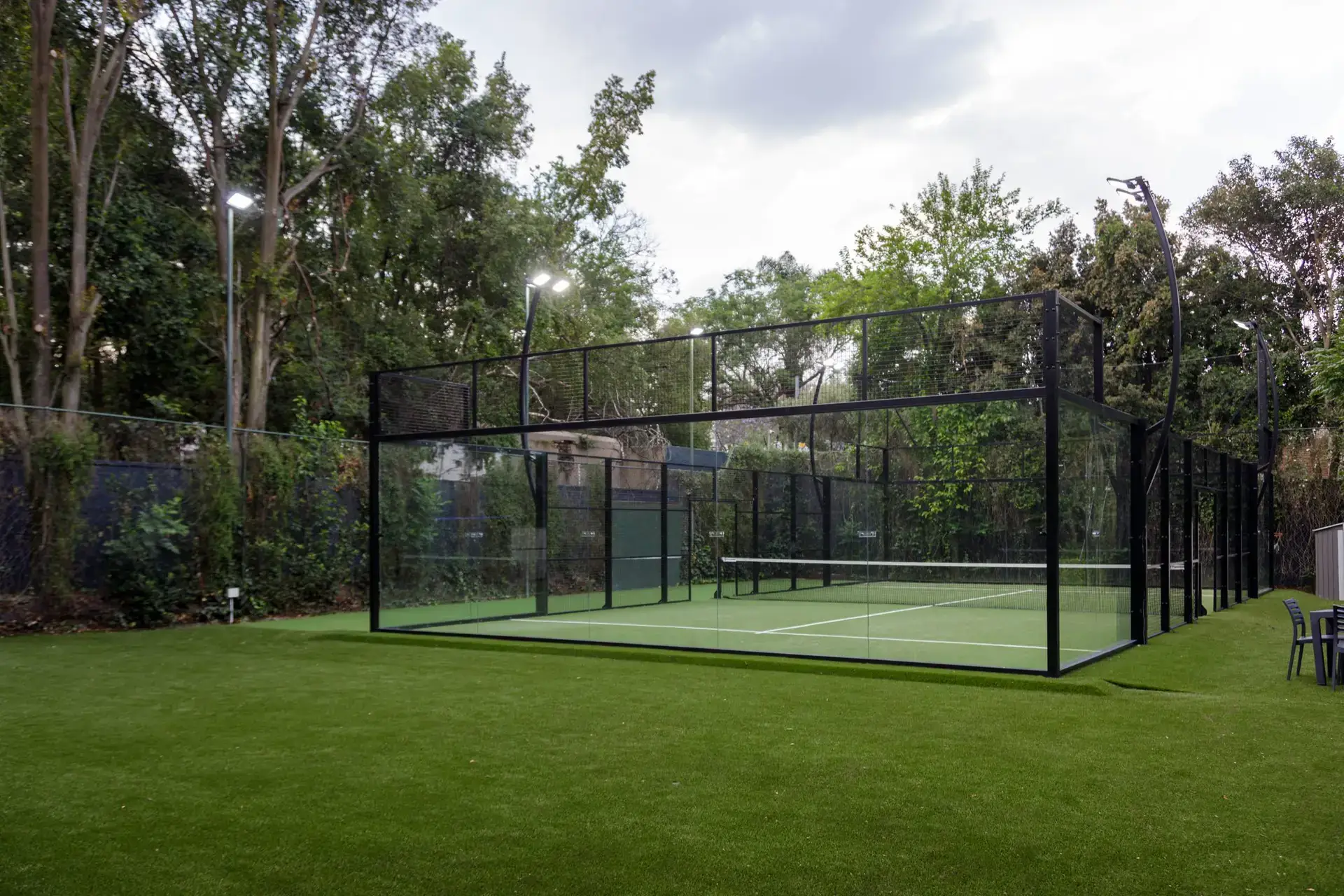
Our partnership with Padel Galis, Spain’s leading court manufacturer, gives schools access to the same court technology used in international competition venues. Models like the Mundial 90 Panoramic and Wilson Elite bring panoramic padel courts visibility, reinforced structural performance and premium LED lighting to school environments.
For schools with tighter budgets, our budget-friendly court range delivers strong core playability and clean aesthetics at a more accessible price point, without compromising on the structural basics. Explore the full padel court range to match the right model to your school’s programme and budget.
Padel Court Pods and Facility Add-Ons: Building a Complete School Sports Hub
A multi-court padel facility at a school does not have to stop at the courts themselves. Padel court pods and add-on infrastructure turn a set of courts into a complete sports and community hub that the school can manage, programme and monetise effectively.
Our Mono Pod range offers three sizes:
- Mini Pod (from R97,000): Compact storage and kit management, ideal as a first add-on for school padel programmes
- Midi Pod (from R339,000): A full pro shop and storage space with timber interior, suited to schools running coaching programmes or selling equipment
- Maxi Pod (from R419,000): Expanded lounge or retail space for schools that want to build a social hub around the courts
Padel courts add significant value to the lifestyle offerings within these developments, creating both recreational and marketing opportunities. The same logic applies to schools: a well-designed padel facility with a pod becomes a centrepiece of the campus sports offering and a genuine draw for prospective families.
The Turnkey Padel Court Construction Process for Schools
One of the most common concerns school bursars and facilities managers raise is project management complexity. Managing subcontractors, civil works, structural approvals and court installation alongside the ongoing demands of a functioning school campus is a significant logistical challenge.
This is precisely where our turnkey padel court construction model delivers its clearest value. We offer consultation, architectural design, court procurement, construction, and maintenance services, all managed by a single accountable team from first serve to final handover.
The process follows structured stages with defined outcomes at each phase:
- Feasibility and planning: Site visit, layout options, court count modelling and budget framework. Outcome: a clear picture of what is possible on your grounds before any capital is committed.
- Design and engineering: Architectural padel court design, 3D renders, structural and roof specifications. Outcome: approved construction drawings specific to your campus.
- Site preparation: Civil works, groundworks, slab preparation and drainage. The installation of a padel court requires a solid, level concrete base. Outcome: a fully prepped site, ready for court installation.
- Court installation: Steel and glass structure, turf, nets, lighting and any pod or roof works. Outcome: a world-class padel court, ready for play!
- Snagging and handover: Final inspection, warranties issued, maintenance programme set up and staff briefed.
See how this process has delivered results across Southern Africa in our completed projects portfolio. We use completed work such as Coalition, Marks Park, and Pitch n Padel to guide new clients on what works in practice at different scales.
This infographic highlights five key benefits of adding padel courts to school facilities. It explains how these courts boost student fitness, PE opportunities, and community engagement.
Padel Court Feasibility for Schools: What to Assess Before You Build
Every successful school padel project starts with an honest feasibility assessment. This is not just about whether courts fit on the grounds. It is about whether the investment makes financial and operational sense over a 10 to 15-year horizon.
Our padel court feasibility service delivers a four-stage data-driven process covering:
- Discovery: Understanding the school’s programme objectives, available space and existing infrastructure
- Analysis: Market context, local demand, court count options and revenue scenario modelling
- Report: A detailed financial model showing capital outlay, operating costs, projected utilisation and payback narrative
- Close: A clear decision framework so the school’s leadership can commit to the right project size with confidence
Schools in padel courts Johannesburg, padel courts Cape Town, padel courts Durban and padel courts Pretoria each face different demand dynamics, competitive contexts and catchment demographics. Our feasibility work is tailored to those specific local conditions, not a generic template.
How Schools Can Benefit From Installing Padel Courts Through Long-Term Maintenance
A padel court is a significant capital asset. Like any asset, its long-term value depends entirely on how well it is maintained. Schools that invest in padel court construction and then neglect ongoing maintenance see turf performance degrade, glass clarity diminish and structural elements wear faster than necessary.
Our padel court maintenance programme is designed to protect exactly this kind of investment. It covers:
- Routine scheduled inspections: Turf grooming, glass and structure checks, lighting optimisation and safety sign-offs
- Reactive support: Fast-response repairs for breakages, weather damage or wear-related issues, using original specification parts
- Longevity planning: Design and material choices from the build phase that reduce lifecycle cost and keep courts performing well for longer
Our support continues well beyond project completion. Schools dealing with facility management across multiple buildings and grounds particularly value having a single dedicated padel partner who understands the original build and can respond quickly when something needs attention.
Generating Revenue: How School Padel Courts Pay for Themselves
A school padel facility does not need to operate purely as a cost centre. With the right operational model, courts can generate meaningful revenue outside school hours that directly offsets construction and maintenance costs.
Revenue-generating uses for school padel courts include:
- Community and club bookings during evenings and weekends via digital booking platforms like Playtomic
- Holiday programmes and coaching clinics for students and the broader community
- Tournaments and leagues hosted on the school facility, with sponsorship and entry fee income
- Corporate bookings for nearby businesses seeking employee wellness and team-building activities
- Branded facility partnerships with local businesses or padel equipment brands
Dynamic pricing and digital booking systems can increase court utilisation by 15 to 25% during off-peak hours. Combined with a Mini or Midi pod for pro shop operations, a school multi-court padel facility can run as a revenue-positive operation that funds its own maintenance programme.
In South Africa, Padel Build is at the forefront of efforts to introduce and establish this exciting sport, and schools that move early will secure first-mover advantage in their communities before court availability in their area becomes competitive.
Read more about strategy, operations and the latest developments on our padel insights blog. For frequently asked questions about the build process, materials and installation requirements, see our FAQ page.
Conclusion: How Schools Can Benefit From Installing Padel Courts Starts With the Right Partner
The case for how schools can benefit from installing padel courts is clear across every dimension: physical education outcomes, space efficiency, gender inclusion, revenue potential and long-term facility value. What separates a great school padel project from an average one is execution quality and the expertise behind it.
As South Africa’s premier turnkey padel court construction company, we manage every stage of the process so school leadership teams can focus on what they do best. From initial padel court feasibility through padel court design, construction, padel court installation and ongoing padel court maintenance, our team handles the full lifecycle under a single accountable contract.
Whether your school is exploring a new outdoor padel courts installation, a tennis court padel conversion, a covered indoor padel courts facility, or a full multi-court padel facility with pods and roofing, we have the experience, the partnerships and the process to deliver it.
Contact us today to discuss your padel project. Explore our full services offering or get in touch with our team to book a site consultation. The first serve starts here.
Frequently Asked Questions
How can schools benefit from installing padel courts in 2026?
Schools benefit from installing padel courts by improving PE participation rates, maximising limited grounds through the 3:1 space efficiency over tennis, generating community revenue outside school hours, and offering a sport that appeals equally to male and female students. Padel court construction delivers infrastructure that serves the school for 15 or more years with proper maintenance in place.
What is the cost of installing padel courts at a school in South Africa?
Padel court construction costs vary based on court count, court type (standard versus premium padel courts), whether a roof structure is included, and the level of civil prep required. A formal padel court feasibility assessment gives schools a precise cost model before any commitment is made.
Can a school convert its existing tennis courts into padel courts?
Yes, a tennis court padel conversion is one of the most cost-effective options for schools with existing infrastructure. The process retains the concrete slab, replaces the tennis court structure with glass-walled padel courts, and typically allows multiple padel courts to be created from a single tennis court footprint with minimal site disruption.
Do schools need indoor padel courts or are outdoor courts sufficient?
Both indoor padel courts and outdoor padel courts are viable for schools. Outdoor padel courts are more affordable and work well in most of Southern Africa’s climate zones. Indoor padel courts with padel court roofing ensure all-weather play and significantly higher year-round utilisation, which is particularly valuable if the school plans to open the facility to the community.
How long does it take to build a padel court at a school?
Project timelines depend on the scope of works, site preparation requirements and whether the project involves new construction or a tennis court padel conversion. Our turnkey padel court construction team manages the full process from feasibility to handover, with clear stage-by-stage outcomes and timelines agreed before groundworks begin.
Can a school generate revenue from its padel courts to recover construction costs?
Yes. Schools across padel courts South Africa are already opening facilities to community bookings, running holiday coaching clinics and hosting tournaments outside school hours. Digital booking platforms and padel court pods for pro shop operations make it straightforward to run the facility commercially without heavy administrative overhead.
Who are the best padel court builders for school projects in South Africa?
Padel Build is South Africa’s leading turnkey padel court construction company, covering the complete project lifecycle from feasibility and padel court design through to installation, handover and padel court maintenance. With a direct partnership with Padel Galis and a proven track record across Southern Africa padel courts projects, we are the padel court builders specifically equipped for complex, high-standard school installations.